
Melville Holmes’s work extends into the field of art conservation and the scientific analysis of historic materials. He has published several papers which include:
“Amber Varnish and the Technique of the Gentileschi,” included as an appendix in Artemisia Gentileschi and the Authority of Art: Critical Reading and Catalogue Raisonné by R. Ward Bissell, Penn State University Press (1999).
“Science and the Art of Colour in Painting,” Painting: Techniques & Conservation, published by Government Museum and Art Gallery, Chandigarh, India; Punjab Virasat Charitable Trust, Chandigarh, India; Heritage Restorers (2010).
Additionally, he has written for Classical Realism Journal, American Art Review, Western Art & Architecture, and Art Chowder and was cited in “Amber varnish’ and Orazio Gentileschi’s ‘Lot and His Daughters'” (Leonard, Khandekar, and Carr) in The Burlington Magazine (Jan. 2001).
It took me many years to realize how great a gulf separates the contemporary artist from his or her seventeenth-century counterpart. There are few teachers of the “old way,” for there are no living links to the workshops of the “golden age” where technical understanding and sound craftsmanship were the norm. Speculations about the “secret of the masters” have proliferated since the eighteenth century, but often proved untrustworthy. In 1987, I resolved to rely no longer on the opinions of others and undertook the study of the materials of painting, their chemistry and technology, in historical sources and the scientific analysis of art in museums. This was combined with much practice in making paint by hand. I found old master effects that some associate with style really arose from a simpler, more direct relationship with the raw materials themselves, before materials for artists were supplied by industry. Painting in deliberate layers and glazing was simply a way to get the most out of a few pigments combined with oils and natural resins. My goal is to attain the level of epressive freedom and control of the seventeenth-century masters, to return to their foundation while taking full responsibility for the integrity of my art.
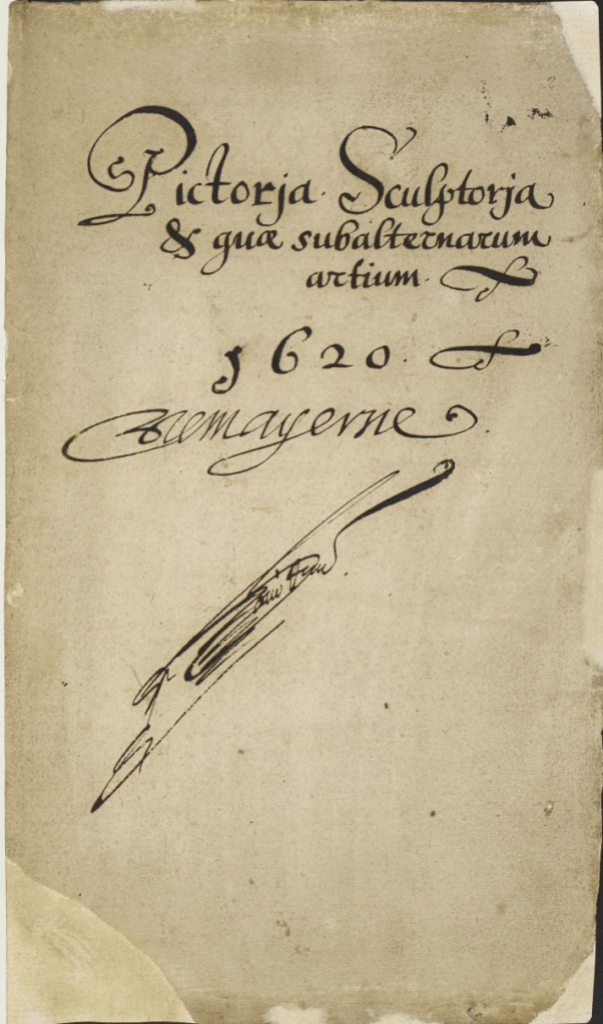
Right: Title page of Pictoria, sculptoria et quae subalternarum artium (compiled 1620-1646) by Théodore De Mayerne, based on conversations with Rubens, van Dyck, Mytens the Elder, Paul van Somer, and Cornelius Johnson.
 Melville Holmes